LETTING
OF VALUABLE CANAL WATER POWER AT HUNTINGTON, IA: Sealed proposals will be received by the
undersigned at Fort Wayne until the 15th day of September next, for the use and occupation
for the term of thirty years, of all the surplus water necessarily passing around the two
upper Locks in Huntington, be the same more or less-the water to be used on an overshot
wheel of 15 feet diameter, and the power applied to Flouring. With the water power will
also be leased a block of ground equal to about three full lots, favorably situated for
its use, and also for the erection of a Warehouse in conexion (sic) therewith, for
the storing and shipping of grain. It is supposed the power will be sufficient to propel
two run of stones. LETTING
OF VALUABLE CANAL WATER POWER AT HUNTINGTON, IA: Sealed proposals will be received by the
undersigned at Fort Wayne until the 15th day of September next, for the use and occupation
for the term of thirty years, of all the surplus water necessarily passing around the two
upper Locks in Huntington, be the same more or less-the water to be used on an overshot
wheel of 15 feet diameter, and the power applied to Flouring. With the water power will
also be leased a block of ground equal to about three full lots, favorably situated for
its use, and also for the erection of a Warehouse in conexion (sic) therewith, for
the storing and shipping of grain. It is supposed the power will be sufficient to propel
two run of stones.
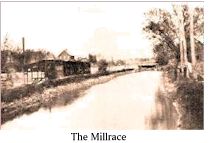 The Lessee will be expected to construct and keep
in repair at his own expense, the head and tail race, the plan and estimate of which is
left for inspection with Capt. Murray, of Huntington. But in view of the unusual expense
of this tail race over and above what is ordinarily incurred in the improvement of canal
water power, the Lessee will be allowed a credit therefore to the amount of one thousand
dollars, out of the first rents falling due, until said rents amount to this sum.
Proposals will state the annual rent to be paid for the whole power upon the conditions of
this notice. The Lessee will be expected to construct and keep
in repair at his own expense, the head and tail race, the plan and estimate of which is
left for inspection with Capt. Murray, of Huntington. But in view of the unusual expense
of this tail race over and above what is ordinarily incurred in the improvement of canal
water power, the Lessee will be allowed a credit therefore to the amount of one thousand
dollars, out of the first rents falling due, until said rents amount to this sum.
Proposals will state the annual rent to be paid for the whole power upon the conditions of
this notice.
The situation of this water power, on the bank of the
Canal, in the midst of a growing town, and in a district of county scantily supplied with
hydraulic power, it is believed renders it well worthy the attention of Millers. By order
of the Board of Trustees
J. L. Williams,
Chief Engineer W & E Canal.
Indiana Herald. Sept. 9, 1848
The renting of water power from
the canal was one of the sources of revenue, and numerous mills of various kinds sprang
up, as did also grain elevators, shops warehouses and other establishments resulting from
increasing trade and seeking shipping facilities.
Centennial History and Handbook of Indiana. Cottman.
1915. p.114
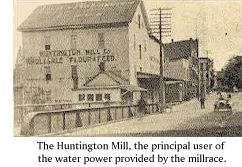 Father brought me to
town. He brought a load of wheat to be ground for flour for the neighbors at Lancaster,
now called River. The grist mill stood where the County jail now stands. When we drove up
to the mill, I saw there was no water in the race, sand said there was no use to unload
for they had no water to grind with. The miller said he would grind it by morning, Cap
Johnson was his name. He kept tavern just across the street from the mill. He told us that
they were full, and said that if we could sleep in the mill he would furnish our meals. Father brought me to
town. He brought a load of wheat to be ground for flour for the neighbors at Lancaster,
now called River. The grist mill stood where the County jail now stands. When we drove up
to the mill, I saw there was no water in the race, sand said there was no use to unload
for they had no water to grind with. The miller said he would grind it by morning, Cap
Johnson was his name. He kept tavern just across the street from the mill. He told us that
they were full, and said that if we could sleep in the mill he would furnish our meals.
Father told him this would be all right. By 10.00 o'clock I
heard the water rolling down the millrace as if it had to. It was not long before I heard
the mill going. It kept me from sleep all night. The water came out of the canal. By next
morning all the grist was ground.
Huntington Herald, Feb. 14, 1914 Reminiscences by Isaac
Brumbaugh. (VM Collection)
|