In planning the construction of this canal,
the high water marks of the freshet of January 8, 1828, to that time the greatest flood in
the known history of this part of the state, were used as guides in obviating, as well as
could be done, the damages of anticipated floods. But in June 1858, all the streams in the
area attained a flood stage that far surpassed that of 1828. The Wabash river exceeding
the earlier by 2 feet. In planning the construction of this canal,
the high water marks of the freshet of January 8, 1828, to that time the greatest flood in
the known history of this part of the state, were used as guides in obviating, as well as
could be done, the damages of anticipated floods. But in June 1858, all the streams in the
area attained a flood stage that far surpassed that of 1828. The Wabash river exceeding
the earlier by 2 feet.
Indiana Magazine
of History Vol. XXV. Dec. 1934 #4 - The W&E at Lafayette
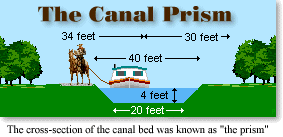
According to specifications, a sixty foot swath had to be grubbed
out all along the line. The channel was to be forty feet wide at the top, twenty-six at
the bottom, four feet deep, banks two feet above the water line, the towpath covered with
gravel.
Indiana Canals. Paul Fatout. Purdue University Press
1972
In all places where natural surface of the earth is
above the bottom of the canal and where the line requires excavation, all trees, saplings,
bushes, stumps, and roots shall be grubbed and dug up at least 64 feet wide, this is 34
feet wide on the towing path side of the center and 30 feet wide on the opposite side of
the canter, together with all logs, wood, and brush of every description shall be removed
at least 20 feet beyond the outward line of said grubbing.
 All
trees, saplings, bushes and stumps shall be cut down close to the ground so that no part
of any of them shall be left more than 1 foot in height above the natural surface of the
earth, and shall also, together with all logs, brush and wood of every kind, be removed
entirely from said space. And the trees, saplings, and bushes also shall be cut 15 feet
wide on each side of said space to be cleared and all trees which in falling will be able
to break into the banks of the canal and whole situation of line may require grubbing, low
chopping clearing shall be extended in breadth so far that no uncleared land may be
occupied with embankment or excavation. All
trees, saplings, bushes and stumps shall be cut down close to the ground so that no part
of any of them shall be left more than 1 foot in height above the natural surface of the
earth, and shall also, together with all logs, brush and wood of every kind, be removed
entirely from said space. And the trees, saplings, and bushes also shall be cut 15 feet
wide on each side of said space to be cleared and all trees which in falling will be able
to break into the banks of the canal and whole situation of line may require grubbing, low
chopping clearing shall be extended in breadth so far that no uncleared land may be
occupied with embankment or excavation.
Canal clearing specifications. V.F.Van Buskirk. Wabash
County Historical Society
|